
Tag Archive for: organizing tips for families

Acts of Kindness

kindness is contagious

I’ve always liked the idea of New Year’s Resolutions. Starting a new year with an intention to better my life in some way, is very appealing to me. Many people include an organizing project or habit as part of their new year’s resolution. As a Professional Organizer, I fully support this. However, I’d like to offer another option that can help you help others, as well as, help you get organized. This year, my new year’s resolution is to perform at least one small acts of kindness each week. This idea was sparked by a newsletter I received last year with a list of 60 small acts of kindness. Many of the listed acts encourage you to perform organizing actions as well. Maybe this list will inspire you to help others and get organized.

60 Small Acts of Kindness

  1. Hold the door open for the person behind you.
  2. Introduce yourself.  Make new colleagues, classmates, etc. feel welcome.
  3. Clean out all your old clothes and donate them to someone in need. Your old is another person’s new.
  4. Write a positive Yelp review about a local business you like.
  5. Listen intently to people’s stories without trying to fix everything.
  6. Donate blood.  One pint of blood can save up to three lives. Locate your nearest blood drive.
  7. Volunteer at a hospital, homeless shelter, nursing home, etc. Get outside of yourself and help others. Check out Volunteer Match.
  8. Buy house warming gifts for new neighbors.
  9. Inspire others online.
  10. Share your umbrella with a stranger on a rainy day.
  11. Check up on someone who looks lonely.
  12. Let someone with only a few items cut you in line at the grocery store.
  13. Spread good news.
  14. Replace what you’ve used. For example, fill up the copier or printer with paper after you’re done using it or start a fresh batch of coffee.
  15. Give words of encouragement to someone about their dreams, no matter how big or small they are.
  16. Stop and buy a drink from a kid’s lemonade stand.
  17. Help someone get your parking space in a crowded parking lot when you’re leaving.
  18. Babysit for couples or single parents who don’t get out much so they can have some alone time.
  19. Look for ways to save a few extra bucks a month and then donate it to a good cause or charity.
  20. Shop at your local charity thrift store.  The money you spend there helps others.
  21. Help someone get active.  There’s a coworker or acquaintance in your life who wants to get healthy, but needs a helping hand.  Offer to go walking or running together or join a gym together.
  22. Check out FreeRice.com – a site that gives to those in need when you playing a game.
  23. If someone you love really likes something (a meal, a favor, etc.) give it to them when they least expect it.
  24. Make a difference in the life of a child. Give them your time and undivided attention.  Read Raising Kids Who Will Make a Difference.
  25. If you shop online, make your purchase through Give Back America.
  26. Pay for the person in line behind you.
  27. Drop off your old eye glasses at your local LensCrafters as a donation to the OneSight program.
  28. Create a care package and send it to an active duty military unit.
  29. Redirect gifts.  Instead of having people give you birthday and holiday gifts, ask them to donate gifts or money to a good cause.
  30. The next time you see someone pulled over with a flat tire, or in need of assistance, stop and ask how you can help.  Read How to Be an Everyday Philanthropist.
  31. Become a mentor or tutor to someone in need.
  32. Help the weary shopper in front of you who needs that extra two or three cents to avoid breaking a 20-dollar bill.
  33. Come to the rescue.  If you realize someone is sick, bring them some hot tea, soup, etc.
  34. Be a courteous driver.  Let people merge in front of you.
  35. Put some change in an expired parking meter (where its legal).
  36. Offer your seat to someone when there aren’t any left.
  37. Listen to someone’s pain and help them find a path through it.
  38. Hug a friend.  Let them know how important they are.
  39. Think twice before you throw something away. As Jack Johnson once said, “Reduce, reuse, and recycle.”
  40. Help an entrepreneur with a Kiva donation.
  41. Bake cookies or brownies and share with a neighbor or colleagues.
  42. If you have a good book you’ve read that’s just sitting around on a book shelf, give it away to a friend.
  43. Become a member of Freecycle, and participate.
  44. Clean up litter in a park or open space nearby.
  45. Look into co-housing a collaborative neighborhood initiative.
  46. Borrow and lend things in your neighborhood by using Neighborgoods.net.
  47. Send a nice email or handwritten card to someone you know, unexpectedly.
  48. Leave encouraging post-it notes in library books and other random places.
  49. If you see a couple taking a self-pic, offer to take the picture for them.
  50. Setup a donation box at your school, work or place of worship and ask others to make canned/dried food contributions.  Then deliver the donations accordingly.
  51. Join efforts to preserve and protect the environment.
  52. Donate cat and dog food to an animal shelter. Call and ask what is needed.
  53. Compliment someone who deserves it.
  54. If there’s been an accident or a potentially hazardous situation presents itself on the road, report it to the local authorities.  Your phone call could save a life.
  55. Collect and donate prom dresses for underprivileged youth.  Check out the Princess Project.
  56. When you’re getting fast food, buy an extra meal for a homeless person.
  57. Stand up for someone. Lend your voice. Often the powerless, the homeless, the neglected in our world need someone to speak up for them.
  58. Take the time to teach someone a skill you know.
  59. Teach others how to make a difference in this world by setting a good example every day. Read 29 Gifts: How a Month of Giving Can Change Your Life.
  60. When someone wants to repay you for something, ask them to pay it forward.

May 2016 be filled with kindness and organization.

List provided by Mike Michel from R.S. Gilmore Insurance Agency, Inc.

©  January 2016   Janine Cavanaugh, Certified Professional Organizer®   All rights reserved
Organize with Color

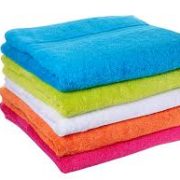
towelsUse color to help maintain order by  having a color distinguish an individuals belongings.  Have each person in the household pick a color she would like for her sheets, towels, lunch bag, hats, gloves, book bag, etc.  This way each individual can easily see what belongs to her, and then be held accountable for keeping those things in order.

Wardrobe swap

logo2012
Busines card colors
Helpful Organizer Newsletter – October 2015
Side Notes:

*** Did you know that I offer a tip of the month on my website.  Here is a peek.
***    Are you or someone you know downsizing or planning to?  Thursday, November 5th I’ll be teaching a class on downsizing in Franklin, MA.
 
***  Question:  What is your least favorite organizing project?
Join Our Mailing List
Is fall your favorite season?  It’s mine. I enjoy the beautiful colors of the season, the cool weather, and the desire to make a steaming pot of soup.  Fall is also a time when I prepare for the cold winter months ahead.  Two organizing projects that help me do that are my seasonal wardrobe swap and my garage clean out.

Fall Organizing Projects


My seasonal wardrobe swap happens four times a year, because I have a tiny closet, and my entire wardrobe can’t be available all at once.  Swapping out the lightweight summer tops, pants, dresses, sweaters, and skirts with the warmer versions happens in mid-September when the temperatures start dipping.  A second swap happens at the end of October when I pull out winter footwear, pajamas, coats, and accessories.  This two step approach helps me to be prepared for the yo-yo temperature changes that are typical in New England.  The reverse process happens in the springtime.

Ask yourself these questions when doing your seasonal wardrobe swap.  Evaluating the clothing that is being taken out and put away is a great way to stay organized.


A second fall organizing project is preparing the garage for the winter so the vehicles can fit inside. For me, the garage clean out doesn’t take as long as the closet, but that may not be the case for you.  Here are some helpful guidelines when tackling the garage.

If you’d like more assistance or a personal helper call me for a complimentary consultation at (508) 699-6652 or email me.  I’d be happy to help you.

Recycle Resource

Finding new ways to recycle, for myself and my clients, makes me happy.  Everyone is more motivated to get rid of something when they know it is going to someone who is truly in need.

Currently, I’m in the market for a new pair of eye glasses, and was happy to find out that Lens Crafters recycles eye glasses to individuals in need, world wide.  They accept eye-ware that is in good condition, and do their best to match the prescription to someone in need through their OneSight program.  They even provide you with a donation receipt.
If you have eye-ware that you’d like to recycle, Lens Crafters has two locations in North Attleboro:
1.  LensCrafters
Emerald Square Mall
999 South Washington St., #321

North Attleboro, MA 02760

2.  LensCrafters
Fashion Crossing
1250 South Washington St.

North Attleboro,

MA 02760
From,

Janine Cavanaugh, CPO®
(508)-699-6652
logo square

    If you’d like to share this email message with someone, please click on the Forward email button below.  Thank you and happy organizing this fall!

Organizing Work Areas

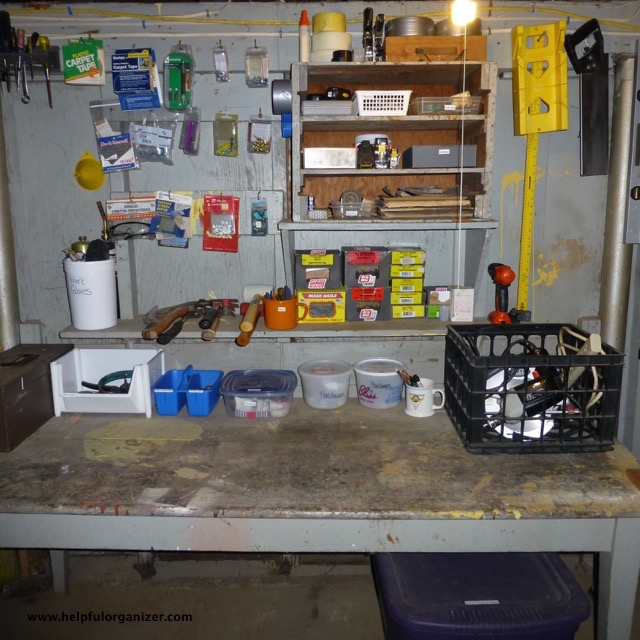
HardwareWorkbenches, craft corners, sewing rooms, scrapbook areas, and the like, are all potential hotbeds of mess.  These locations are filled with tools and supplies that get used and reused often.  They are also locations that house potential, ongoing, and almost finished projects.  So, organizing them, and keeping them organized can be challenging.

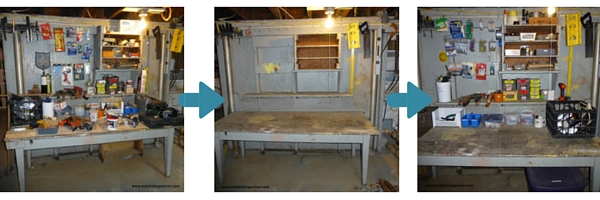
I’ve been itching to help my husband organize his workbench for years.  I understand that it’s his domain, (just like my scrapbooking area is my domain) and that’s why I didn’t take over and just do it myself.  We tackled the project together.  It took us 3.5 hours to work through the organizing process, but when we were finished his tools and supplies were organized, he had a list of all his works-in-progress, and he had plenty of space to actually work on his workbench.

Workbench

We both were pleased with the results and considered the project a success.  Here are some helpful tips that can assist you in successfully organizing your work area (whatever area that may be):

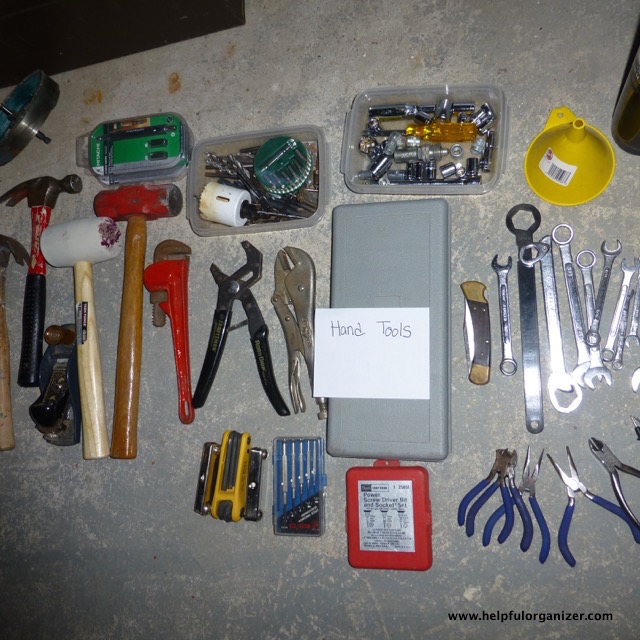
  1.  When sorting tools and supplies into categories use general terms and label each category.  We had 13 different categories; power tools, hand tools, tape & glue, hardware, clamps, painting, plumbing, sanding, measuring, trash, recycle, give away, and belongs elsewhere.
  2.  While working, keep a running list of tasks that you have to address.  This helps prevent you from getting sidetracked and wanting to addressing these tasks right away.  A few tasks on our list are to ask our brother-on-law if he wants the propane torches we never use, and to research how to refill or recycle a fire extinguisher.
  3.  When setting up your work area leave plenty of room to actually work on projects, and have an designated area to store works-in-progress.
  4.  Clearly label the containers that store your tools and supplies.  Although my husband knows what all his tools are, I do not.  So now, when he asks me for a socket wrench, I’ll know at least where to look.
  5.  Use containers that are easy to reach into, sturdy, and are a good size for the items they will be containing.  These tools and supplies get used and reused often.  So, make it easy to get at them and put them away.
  6.  Give yourself a break.  A good time to take a break is after the sorting step.  We took a lunch break after we had cleared the workbench.
  7.  At the end of the organizing project give yourself time to address the trash, recycle, give away, and belongs elsewhere pile.  It may take additional time to address these categories.  For example we have a box of electronic recycle items that we will bring to the Indie Cycle drop off point in three weeks.
  8.  When you reach the finish line, reward your success.

sortingHardwareHandtoolsClamps

©September 2015  Janine Cavanaugh, Certified Professional Organizer®  All rights reserved.

NAPO

Proud member of NAPO

How to Get Organized to Sell Your House

home-sale-signSummer is an optimal time for many homeowners to sell their house, pack up, and relocate.  Unfortunately, this is a stressful process.  It’s easy for sellers to get overwhelmed by all that needs to be done to prepare their house for the market, and start the packing process.  There is so much to organize, so many details to address.  The 10 “Organized to Sell” tips listed below will help any seller focus on the details and take control.

1.  Eliminate piles before you sell.
Don’t let paper and items accumulate on tables, counter tops, or desks.  Keeping horizontal surfaces clear and clean eliminates visual clutter, and allows potential buyers to see the space without distractions.
2.  Reduce before you sell.
Over stuffing closets, bookcases, filing cabinets, cupboards and other storage areas in your home is a red flag to potential buyers.  It screams, “Not enough storage!”  Reducing and limiting the number of items you keep in these areas conveys the message of ample and abundant storage to the potential buyer.
3.  Eliminate surplus before you sell.
Why have ten of something, if two is all you really need until you move?  Pack up and remove surplus or
duplicate items.  A few examples are sheets, towels, dishes, mugs, utensils, toiletries, toys, books, DVDs, etc.
4.  Remove before you sell.
Packing up seldom used items and seasonal items helps your house appear spacious, and that is what potential buyers like.  Some examples are holiday decorations, off season clothing and footwear, archived files, and rarely used kitchen appliances, like bread makers, blenders, etc.
5.  Toss before you sell.
It is perfectly acceptable to throw away things that are broken, damaged, rusty, worn out, torn, stained, or incomplete.  Toss these items without hesitation.  If your belongings look old and worn out the potential buyer sees the whole property as old and worn out.
6.  Donate before you sell.
If you’re not using it now, you won’t use it in your new home.  Ask yourself, “Will I be wasting my time, money
and energy if I pack and move this item?”  Donating items is a great way to help preserve the environment, help those that are less fortunate, and feel content knowing that someone will value what you no longer use.
7.  Sell before you sell.
Selling items that you no longer want, need or have space for in your new home, is a viable option.  A few venues are yard sales, consignment shops, auction houses, newspaper listings, estate sales, or internet listings.  Remember to be realistic about your financial expectations when selling used items.
8.  Rent before you sell.
Renting a storage unit to hold equipment you seldom use and boxes of packed items will help free up space and give you a jump start on the moving process.  Remember space is a valuable commodity.
9.  Spruce up before you sell.
Don’t forget to reduce the clutter in your yard and outdoor living spaces.  These areas are usually the first and
last impression for the potential buyers.  So, make them as clutter-free as possible by removing toys, lawn ornaments, recycle bins, etc.
10.  Hide before you sell.
Store as many items of daily use in your cupboards and cabinets.  For example, put your tooth brushes in the medicine cabinet, your dish detergent in the cupboard under the sink, and your vacuum cleaner in the utility closet.  This is more visually appealing and is less distracting for potential buyers.

©July 2015  Janine Cavanaugh, Certified Professional Organizer®.  All Rights Reserved

NAPO

Proud member of NAPO