Save Time

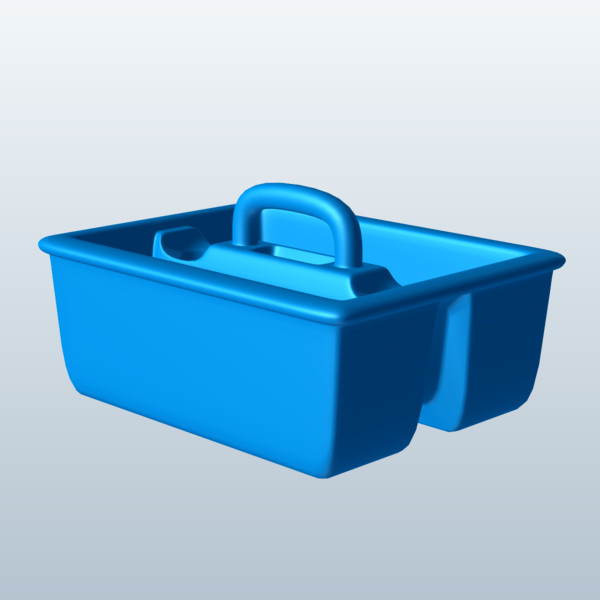
Use a shower caddy to contain items that are collecting on your kitchen or bathroom counter top.  One example is to store vitamins and daily medications in a caddy.  When it’s time to clean the counter, all that is required is to pick up the caddy instead of all the individual bottles.  This will save time and will speed up your cleaning process.

shower caddy

More Clutter Excuses

dishesWe all hold onto things for a variety of reasons.  Some of those reasons are valid and worthwhile.  For example, I’m holding onto my Grandmother’s necklace, because it’s a beautiful piece of jewelry that I enjoy wearing, especially when I want to be reminded of her.  Unfortunately, some reasons for holding onto things are not valid or worthwhile.  For example, the only reason I’m holding onto my (never used) serving dishes is because they were a gift.  When the reason for holding onto something is not valid or worthwhile, it could be a clutter excuse.  Clutter Excuses provide us with reasons to hold onto something, so we don’t have to make the (potentially difficult) decision to get rid of it.  I find that honesty is the best policy when it comes to making decisions.  By honestly answering thought provoking questions regarding why we are holding on to something, we can truthfully evaluate it’s significance in our lives.

A common clutter excuse I hear is, “Someone gave, or bequeathed it to me.”  I believe that a gift is meant to bring joy, and that no gift-giver wants their gift to be a burden.  Answer these five questions truthfully to determine if it’s a burden and time to let it go.

  • It’s yours, and you can do anything you want with it.  What would make you happy?
  • Can you keep a piece or portion of it, and get rid of the rest of it?
  • Can you take a photo of it and then let it go?
  • Do you know someone else who will treasure it?
  • If it’s just in a box in the attic, is it worth keeping?

Another common clutter excuse I hear is, “It’s still good.”  Not everything we part with is broken or unusable.  It’s okay to get rid of items we don’t need, want, or use, even if they are still workable and usable.  There are several options available to us when passing on items like this, and removing them provides us with a less cluttered space.  Answer these five questions truthfully to determine if it’s time to pass it along to someone else.

  • If it’s still good, why aren’t you using it?
  • Could someone less fortunate benefit from it?
  • What are the costs of getting rid of it, verses the cost of keeping it, storing it, cleaning it, and maintaining it?
  • How much space is it taking up?
  • How stressful is it to keep it?

I don’t have any children of my own, so I don’t use this common clutter excuse, “I’m saving it to pass on to my children.”  Have you uttered this excuse?  If so, answer these five questions truthfully to determine if it’s time to stop saving and let it go.

  • How sure are you that they will want it?
  • Are you willing to ask your children if they will want it?  If they are too young to ask at this moment, will you ask them in the future?
  • What are the costs of letting someone benefit from it now, verses the cost of keeping it, storing it, cleaning it, and maintaining it?
  • Could someone less fortunate benefit from it, now?
  • How stressful is it to keep it?

It does take time to make decisions and get rid of stuff.  Have you ever used time as an excuse?  “I don’t have time to deal with it.”  Answer these five questions truthfully to determine if it’s time to make time.

  • How much time do you feel it requires?
  • If you did have time, what would you do with it?
  • Can someone else deal with it?
  • Can you see yourself making time to deal with it, if you had an incentive?
  • How much more needs to accumulate in order for you to make time to deal with it?

As I mentioned before, we all hold onto things for a variety of reasons, but the best reasons are valid and worthwhile.  I hope these questions help you conquer your clutter excuses and provide you with peace of mind.

© May 2015  Janine Cavanaugh, CPO®  All rights reserved

NAPO

Proud member of NAPO

Organizing Paper

Store action papers, notes, and reminders in one location.  Examples of action papers are, information that needs to entered into the computer, information that needs to be read and responded to, and contact information for someone who needs to be called.  The product I use is a multi-pocket organizer that is divided into days of the week, and the location I use is an easy access vertical file holder by my desk.  This gives me one place to store and retrieve action papers, notes, and reminders.  It also helps me to organize and prioritize those actions.

Spring Organizing

Helpful Organizer Newsletter – Spring 2015
Side Notes:***  I’m excited to say I’ve taped a video for my website, and it is up and running on my website home page.  I hope you’ll take a look and let me know what you think.

***    I have one more class scheduled this spring, Downsizing: Organizing the Accumulation of Our Lives.  The class will be at Tri-County in Franklin on April 30th.  Please join me if you’re interested.


***    What is a blog?  The Helpful Organizer Blog I write is short entries of information on organizing topics that I find noteworthy and potentially helpful to my clients and the general public.   Here are a few of my most recent blogs that you may want to read:


Clutter Excuses


Preventing Paper Clutter


Organizing with the Help of Lists


***   Question:

Do you rent storage space?


Join Our Mailing List
Hi,
I hope that spring has brought some sunshine into your world.  After the winter we’ve had, we need it.  I’m pleased to see the buds on the trees and the spring flowers popping up.  Aren’t you?  It also makes me want to air out and spruce up my home.  What about you?


Spring Organizing

Now that we are not buried in snow, it’s spring cleaning time.  What does that look like for you and your family?  Do you open all the windows and scrub the house clean?  Do you schedule a donation pick up day?  Do you get the family involved in yard pick up?  I’d like to suggest that you include spring organizing with your spring cleaning, and include projects like the ones listed below.

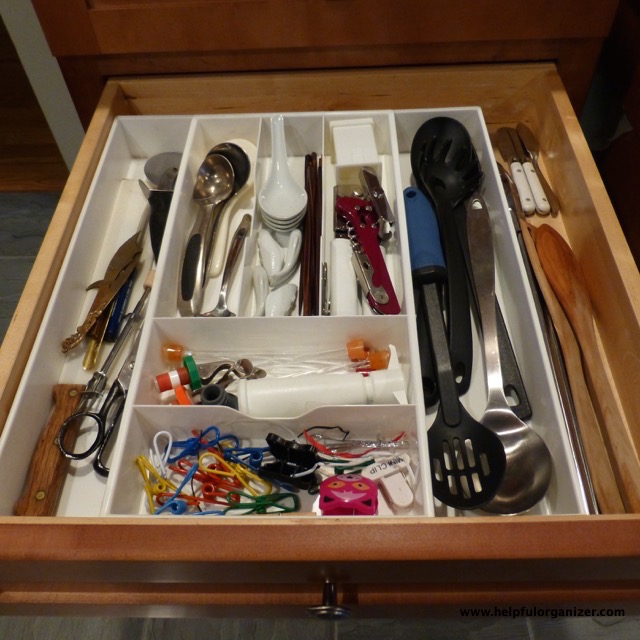
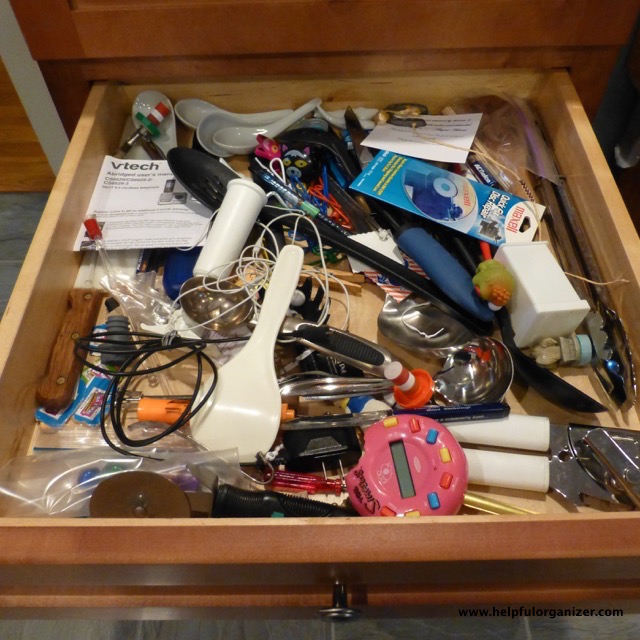
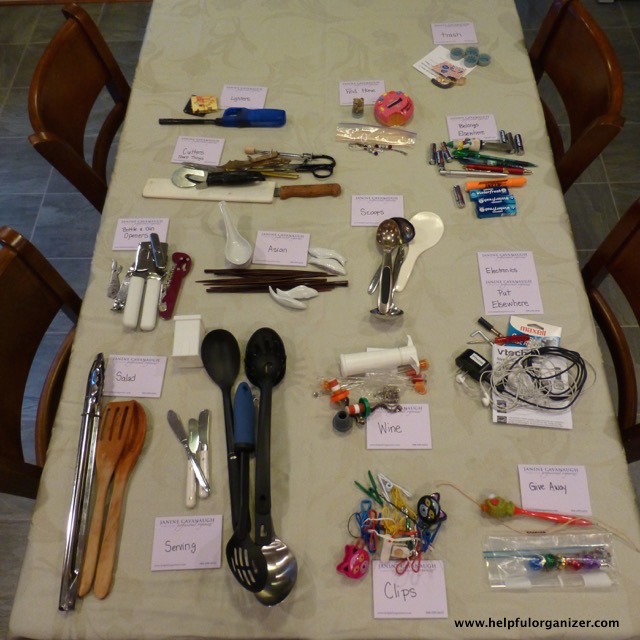
1.  While airing out the house, include your kitchen cupboards.  Give yourself the goal of removing three items from each cupboard that haven’t been used in a few years.  Or it can be an item that is a duplicate of another item.  Or perhaps it is a damaged item or an item that is missing a part.
2.  While planing for lighter summer meals, look through your pantry, freezer and refrigerator for expired foods.  Discard any items that are past their expiration date, and plan to use up items that are about to expire.
3.  While preparing for the relaxing days of summer, see if you spot any pockets of clutter.  Quite often clutter comes from good intentions and unfinished projects.  If you have items you intended to fix, mend or repair, just do it, or get rid of it.  If you have projects that you’ve started but haven’t finished, schedule time to finish them or get rid of them.  Free yourself so you can enjoy a carefree summer.
4.  For more suggestions connect to my Spring Cleaning blog.

If you have spring organizing ideas, please share them with me.

Getting Rid of Stuff


It is not always easy to get rid of something once you’ve decided you no longer need, want, or use it.  So, I’ve started compiling resource lists for removing particular categories of items.  I find that clothing and textiles are one of the easiest categories to donate, recycle, and get rid of.  Please connect with me, and I’ll share my local resource guide for getting rid of clothing and textiles.

If you know of another option, I’d appreciate you sharing it with me.

From,

Janine Cavanaugh, CPO®
(508)-699-6652

    If you’d like to share this email message with someone, please click on the Forward email button below.  Thank you and happy organizing this spring!

Organizing Tax Documents

Keep one tax document folder labeled with the current year, and add papers to it as they collect throughout the year.  Once your taxes have been filed for this year, transfer the documents to a bin labeled past tax documents, and write the specific years that are included in the bin.  Include with your past tax documents,  all your supporting tax papers, financial records for that year, and proof of tax payment.  Store the bin in a remote area.  Start a new tax folder for the next year.