
Focus on Editing
|
 |


|
|||||||||||||||||||||||||||||

|
|
|
|||||||||||||||||||||||||||||
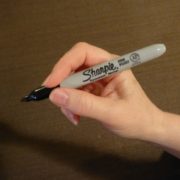
 Eliminate duplicates to reduce clutter. Why have ten of something, if three will do? Why have three of something, if one will do? Look around your home for duplicates. How many can you eliminate? To prevent the need to purchase duplicates in the first place, have an assigned home for items that tend to get misplaced or lost. Label each assigned home to clearly identify it’s location.

 If you had to guess the dollar amount of new, unopened items in your home, what would you guess? Don’t count food or paper goods. Count surplus items, unopened gifts, new clothing that hasn’t been worn, backup items, unopened craft items, new shoes that haven’t been worn, unopened tech toys, new books that haven’t been read, and any other such items. What would your guess be?
It’s estimated that the dollar amount of new, unopened items in the average American household is $7000.00. Do you believe it? I didn’t until I started counting. So, start counting? What do you come up with? Please share.
There are many reasons we purchase things that we don’t end up using, just like there are many things we hold on to for no valid reason. Making decisions on what to keep or not to keep can be challenging. Are you having trouble making decisions? Is it a struggle for you to get rid of things? I’ve devised a Keep Quiz that will help. Here are the instructions. Ask yourself the following ten questions. Please answer them honestly, and then follow the rest of the instructions.
If you answer yes to 6 or more of the questions, yeah for you. It’s a keeper. If you answered yes to only 1 or 2 questions, it’s time to let it go. If you answered yes to 3-5 of the questions, give yourself 3 months to use the item. Put a sticky note on the item with the use-by-date. If, in 3 months, it hasn’t been used, let it go. However, if the item is meant for display, put it in a prominent place for 3 months. At the end of 3 months take the Keep Quiz again and see if you get different numbers.
How did you do on the Keep Quiz? Did it prompt you to take some action? I hope so. Please share.
© May 2017 Janine Cavanaugh, Certified Professional Organizer® All Rights Reserved


How easy is it for you to get rid of stuff? Deciding what is worth keeping and what needs to go, can be difficult. I follow a three step confirming process. These three steps help me confirm what I have, and decide what I need, use, and want. The first step is to determine what I have. The second step is to decide what stays and what goes. The third step is to dispose of stuff. Let me explain how this confirming process works.

The first step is to determine what I have. This means gathering and assessing. I pick a small group of items to work with at a time. Instead of working with all my clothes, I work with just my spring wardrobe. Another example is instead of working with all my books, I only work with my organizing books. This helps reduce the time needed to complete the process, and helps prevent procrastination. Once I’ve chosen which category I want to work with, I gather the items into one location and assess them.
The second step is to decide what stays and what goes. I find it helpful to have criteria for what items stay and what items go. I call them my confirming guidelines, and they help me make decisions.
Examples of confirming guidelines:
1. It has to go if it’s broken, damaged, or missing parts, and you’re not going to fix it or pay to have it fixed within 3 months.
2. It has to go if it hasn’t been used in the past 3 years and won’t be used in the next 3 years.
3. It has to go if it is more than one size too big or too small.
4. It has to go if it’s torn, stained, or moldy, and you’re not going to fix it or pay to have it fixed within 3 months.
5. It has to go if it doesn’t reflect your current lifestyle. (Use 3 year timeline.)
6. It has to go if it’s very similar or identical to another item. Keep three favorites and the rest have to go.
7. It has to go if you’ve already purchased a replacement for it.
8. It has to go if it’s something you don’t like, or something that never worked right or fit right.
9. It has to go if the reason you’re holding onto it is not a good, valid reason. (See blog articles)
10. It has to go if it brings negative thoughts or causes self doubt.
The third step is to dispose of the stuff. It helps to schedule a day for removal, whether it is donations, items to be recycled or items to be given away. Voila! Confirming process complete.
© April 2017 Janine Cavanaugh, Certified Professional Organizer® All Rights Reserved

 Are you procrastinating and making excuses for holding onto stuff? Are you clinging to material possessions for no good reason? Things that are merely taking up valuable space aren’t worth holding onto. Decide to decide, and let go of these things. You’ll feel lighter and brighter.















 re are a few I thought you’d find helpful.

Follow Me