Keep Clutter at Bay
|
 |
|
|||||||||||||||||||||||

|
|
|
|||||||||||||||||||||||
 I was very fortunate to have the opportunity to give a presentation on Conquering Clutter with Confidence at the 2018 Conference for NERSC (New England Resident Service Coordinators). I was excited to share my knowledge and expertise with this group. I started my presentation with the question, What is clutter? I shared the dictionary definition and my definition.
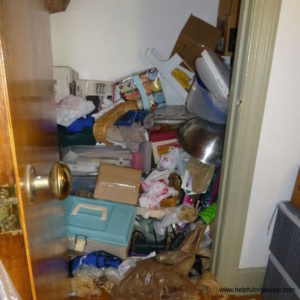
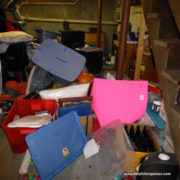
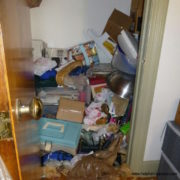
After explaining my definition I was ready to move on, but was stopped with a few questions. One was, “What is the difference between hoarding and clutter and when is the line crossed?” I explained about the clutter-hoarding scale which is a tool used specifically for this purpose, and there is an image rating that is helpful to view. I also mentioned that I do not have the skill set to work with level 4 or 5 hoarders because the situation calls for more intervention and support than I can provide.
A second question was, “I have 3 sets of Christmas dishes, and my husband calls them clutter; are they?” To answer this I had to ask a few clarifying questions. Are the dishes scattered about in a jumbled mess? Her answer was no. Are they being used and serving a specific purpose? Her answer was yes. Are they causing you stress or frustration? Her answer was no for me, but yes for my husband. I told her that in my opinion, based on her answers to my questions, her Christmas dishes were not clutter. She gave an excited yelp and said she couldn’t wait to tell her husband. However, I was compelled to add that 3 sets of Christmas dishes may be a bit excessive, and if her answers to any of the 3 questions changes in the future, then their label would in fact be changed to clutter. I also pointed out that each individual views their own personal possessions differently than another person’s possessions. It is easy to misunderstand the value someone places on their own things. So think twice before tossing out someone’s stuff (“clutter”).
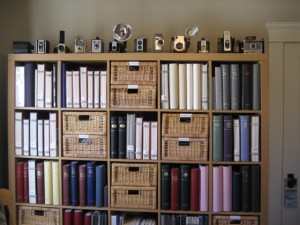 A third question was asked, “What is the difference between a collection and clutter?” The dictionary definition of a collection is a group of objects or works to be seen, studied, or kept together. A collection is a group of items that someone is proud to share and display. Would you be proud to share and display your clutter? A collection holds monetary and sentimental value where as clutter is usually unimportant, random stuff. A collection is intentionally collected, but clutter is a mess that has accumulated as a result of not deciding what to do with things and not taking action with those things.
After thoroughly answering the question, what is clutter we discussed several clutter conquering solutions. Would you like some solutions? They can be found in the following articles.
©May 2018 Janine Cavanaugh, Certified Professional Organizer® All Rights Reserved
 Don’t let things touch the floor. Reserve floors for feet, furniture, and shoes. This helps reduce clutter buildup on the floor, especially in kids’ rooms.
One of my most popular workshop topics is downsizing. People want help with where to start and how to progress through the difficult task of letting go. They’re looking for guidance on how to make decisions about sentimental items and all the other things that have been accumulating in their homes. They’re hoping to get rid of stuff so their children won’t have to deal with it all. Therefore, I’ve devised a 7 Step Downsizing Action Plan that I share and discuss in my workshops. Here it is.
Step 1 – Prepare
Get ready for the transition by taking a close look at your options and where you are headed. Psych yourself up to make decisions about your next home and material possessions. Share the news with everyone and ask for help from family and friends, or seek professional assistance.
Step 2 – Write it down
Plan to work 8 hours for every year you’ve lived in your current home. Schedule 2 or 3 hours at a time and work for 20 minutes followed by a 5 minute break.
Step 3 – Get started
If you have a far off deadline (more than 8 months), start by removing items that you don’t want, use, or need. These items will include things that have been stored for others, unfinished fix-it projects, old hobbies, duplicate items, surplus stuff, items of which there are excessive quantity, broken things, expired items, outdated stuff, and damaged goods.
If you have a near deadline, divide items into 6 different categories and tag them. (I use colored painter’s tape to tag items.) The 6 categories are keep, recycle, toss, donate, give or return, and sell.
Step 4 – Reduce
Set limits by taping off cabinets, closets, storage areas, and rooms in your current home that won’t be available in your new home. Work to empty those areas of their contents.
Ask “W” Questions to help you make decisions:
Who? Who will use and maintain this item? Who gave it to you and is that relevant?
What? What purpose does this item serve? What would the giver tell you to do?
Where? Where do you want to make room for this item?
When? When is this item used, appreciated, viewed, treasured? When is it maintained?
Why? Why would you need this item in our new home? Why are you holding onto it?
Step 5 – Address Sentimental Items
Consider the cost of clinging to sentimental items. It takes a lot of money to pack, move, ship, insure, store, and maintain our belongings. Concentrate on keeping the memories, but not the stuff, by preserving them with words and photos. Do this with digital scrapbooks, videos, and a gratitude journal. Instead of having them gather dust in the attic, treasure them by highlighting the best and letting go of the rest. Re-purposing them or use them in a different way so they sever a current need or look for a way that items can bring joy to others.
Step 6 – Establish Exit Strategy
An exit strategy is physically removing stuff by giving, donating, selling, or recycling what you no longer want, need, or use.
Give options: Ask people you know if they want what you’re discarding. Ask family, friends, neighbors, club members, church members, past co-workers, and others. Put items on the curb with a free sign. Use Freecycle or Buy Nothing.
Donation options: Give to charities, non-profits, religious organizations, Boy/Girl Scouts, senior centers, schools, camps, day-cares, shelters, libraries, theater groups, historical societies, and food banks.
Selling options: Look into antique dealers, auctions, estate sales, consignment shops, on-line sites, newspapers, garage sales, estate liquidation.
Removal Companies: Consider junk trucks, dumpsters, all-in-one clean out, complete house clean out companies.
Step 7 – Thrive in Smaller Space with Less Stuff
Here are a few tips for creating and maintaining order in smaller spaces. I hope they help you enjoy your new downsized, simplified lifestyle.
©April 2018 Janine Cavanaugh, Certified Professional Organizer All Rights Reserved

Schedule 2 hours for a paper purge after your taxes have been completed with the goal of cleaning out and shredding old, outdated, and obsolete information. Archive the previous years’ tax and financial files, and keep current active files separate from the archived ones.











Follow Me