

Storage Units – Good or Bad Solution
 Would you consider your home to be an average American home? Do you think you have just as much stuff as your neighbors? Do you rent any storage units? Would you believe that there are 300,000 items in the average American home? That’s a large number of possessions to have, store, maintain, and organize.
Where are people keeping all their stuff? Two of the most common options are in their own homes, or in a rented, off-site storage facility. Actually, the average American home has converted 3 or more spaces into make-shift storage units. (SpareFoot) On the other hand, the self storage industry is a booming business, reaching an annual revenue of 22 billion dollars in 2016. (Statistic Brain Research Institute) According to an LA Times article, there are 51,000 storage facilities in America, which is more than four times the number of McDonald’s.
Before considering another option, let’s ask the question, “Are storage units a good or bad solution?” Do they just allow us to acquire and hold onto more stuff, or do they serve a helpful role in storing our belongings ? In my opinion, I think there are two legitimate reasons for using storage units.
- Storage units are a good idea when they help us through transitions in life. Some of those transitions may be when we’re selling a house, moving long distance, or cleaning out an estate.
- Storage units are a good idea when they are used as temporary holding place for belongings. Some situations when a temporary holding place is needed may be when we’re dealing with a flooded basement, undergoing home renovations, or making decisions on inherited belongings.
Unfortunately, most storage units start off as temporary but become long-term. So, is there another option? I think there is. Live with less stuff. It’s estimated that we use 20% of what we own, 80% of the time (Pareto Principle). That leaves plenty of room for editing and reducing. I know it can be difficult to make decisions on what to keep or not keep, so here are some helpful suggestions:
- Keep or not keep
- Determine, decide, dispose
- Exit strategy
- Stuff be gone
- How to get unstuck when organizing
©October 2017 Janine Cavanaugh, Certified Professional Organizer All Rights Reserved
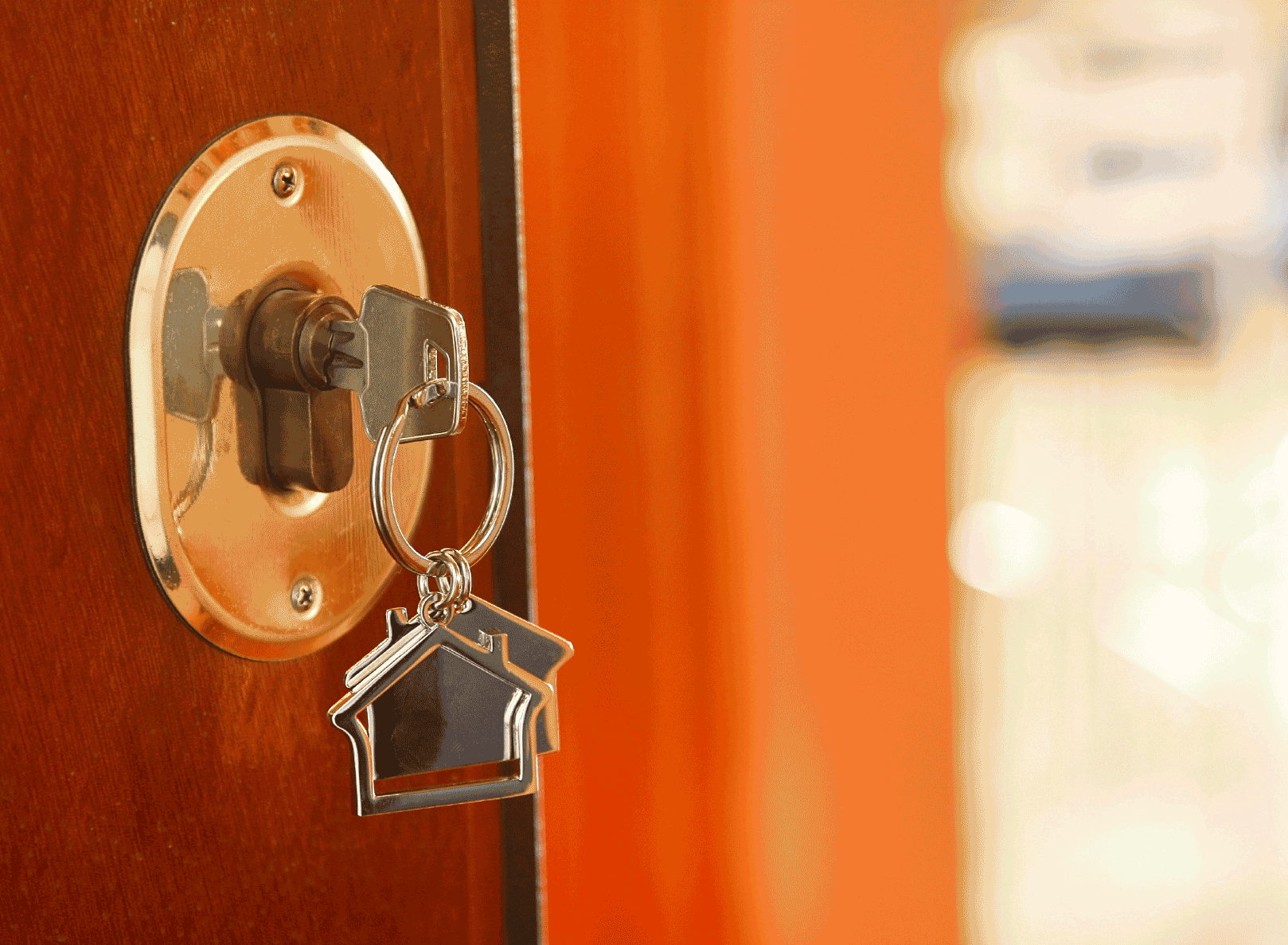
 Give yourself 5 minutes, when you return home, to take care of anything you brought home with you. I mean anything. Put your keys and handbag in a specific spot. Put away your coat and shoes. Take care of receipts, mail, and other papers. Find a home for new purchases or other stuff. Do this every time you enter your home so it becomes a habit. This helps prevent piles of clutter from growing, and helps you stay organized.

















 re are a few I thought you’d find helpful.


Follow Me