

Do you own stagnant things?
Stagnant means lifeless, inactive. Do you have stagnant things in your home? Do you have things that have outlived their usefulness? I think we all do. The longer we live in our spaces the more comfortable we get with our surroundings. It becomes easy to ignore papers that don’t require action, gadgets we tried once, and random things that have become part of our decor. After a while we don’t see these things any longer. They morph into the background of our homes.
After attending a conference session on Feng Shui I decided to get rid of stagnant things in my home. I’ll list 10 stagnant things I removed my home to help you get motivated to do the same.
- An old cardboard display that I had used for a few business presentation more than 5 years ago was recycled with my weekly town recycle.
- An open, partially used bottle of carbon, that is used in fish tank filters, was given away by listing it on FreeCycle.
- A bag of craft supplies that I hadn’t used in more than 5 years was passed along to other creative people I know.
- Unused food in my pantry was donated to my local food bank and Operation Shoebox.
- Gardening gloves that I wore only once because they turned my hands orange were tossed.
- Our ice maker broke 2 years ago. So I finally donated (to Savers) the scoop we had used for that purpose, but hadn’t used since.
- Old makeup was tossed. I haven’t worn make up in years.
- A soup ladle that came with a soup delivery when I was sick, but never used, was donated to Savers.
- Two never been used, hand-me-down light timers were donated to Habitat for Humanities ReStore.
- An open container of Armor All wipes that were given to me a year ago, finally got used up.
These 10 stagnant things may not seem like much, but they have a way of piling up and cluttering our homes. I encourage you to take a good look at your home and reevaluate what’s in your space. If you find stagnant things, get rid of them. You’ll improve the energy of your home (Feng Shui) which will have a positive impact on you.
©June 2021 Janine Cavanaugh, Certified Professional Organizer® All Rights Reserved
 Empty space does not equal available space. Allow yourself some breathing room and wiggle room. Spaces will function more efficiently if they are not over stuffed. Allow yourself empty space in
 Janine Cavanaugh, CPO
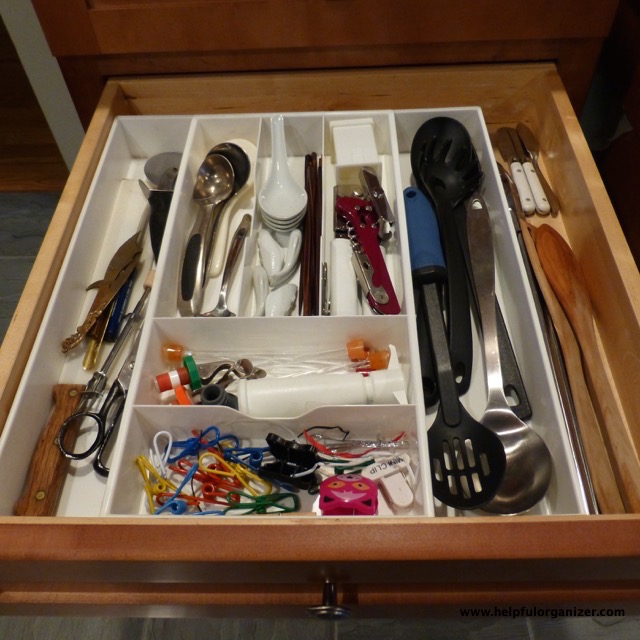
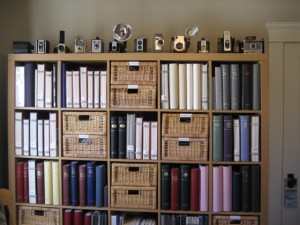
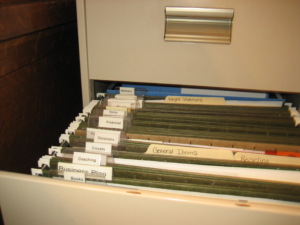 How many junk drawers do you have, and what’s inside them? Junk drawers are usually stuffed with a jumbled mess of random things, hence the name. Therefore, my recommendation is two small junk drawers per household, but that’s it. The rest of our drawers, and all the other containers in our home, need to be filled with items that belong together. For example, store all your tools in a tool box. Hold all your mending things in a sewing basket. Corral all your books on a bookcase. Put all your files in a file cabinet. It’s easier to find things that way and easier to remember where they are. Items that belong together need to be stored together. Other examples of ready-made containers are tie rack, jewelry box, magazine rack, hamper, fishing tackle box, golf bag, shoe rack, toy box, knitting bag, and pot rack. I can list a bunch more, but I think you get the idea.
 Containers create boundaries where there are none. They help us corral small items such as makeup, jewelry, crafts, snacks, and toiletries. Containers help divide drawers into sections. Which is great for
  The container helps us see when we have enough. They give us a visual indication of when we have reached the container’s maximum capacity. Therefore reducing our chances of over-stuffing. However it’s important to stay within the limits of the container. If we allow items to spill out and create piles of stuff outside the container, we’re not following the storage guidelines. Once this happens we’re tempted to purchase another container and not use our existing container as a guide, but it’s much easier to maintain order when we don’t over-stuff. Practice the
 Reduce what we’re attempting to store. We often fall pry to the idea that we already own it, so we need to hold onto it. I encourage you to question that idea. Think about the current usefulness of the things you’re storing and holding onto, and take the
  Make full use of the space we have. Small adjustments can greatly improve our existing storage spaces. For example, in a closet, add hooks, shelves, and
  Favor versatility. Have items that can do more than one thing instead of several single-use items. Avoid items with one very specific purpose like a bread machine. Instead get a mixer that has a bread kneader attachment. The same applies to furniture. Use furniture that has multiple functions and built-in-storage, like an ottoman with storage and a nightstand with a few drawers.
 Question what we bring in? When bringing things in ask
Follow Me